Verho: Curse of Faces – Review
Over the years, we’ve played quite a few Souls-likes. We haven’t found one that can truly stand up to the granddaddy of them all, however. After a while, they also start to blend together, and to really stand out these days, a Souls-like game needs something to set itself apart. Enter Verho: Curse of Faces, an entry in the genre whose hook is in its retro approach. Does blending Souls-like gameplay with nostalgia work, or are there cracks showing in Verho’s ’90s-style mask?
Story
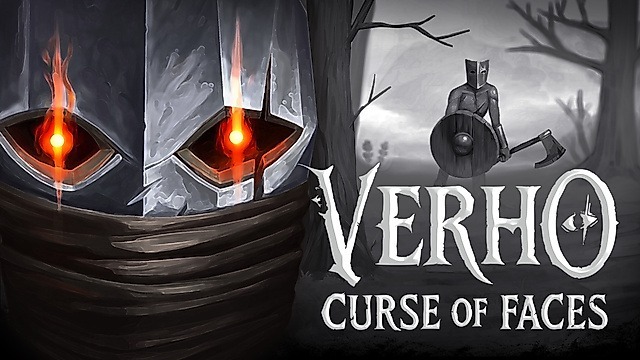
A brief opening cutscene sets up Verho’s story: long ago, a war between powerful wizards devastated the world. One wizard unleashed the Curse of Faces on humanity, causing instant death to anyone who sees another person’s bare face. As a result, people resorted to wearing masks as a means of survival. Centuries later, a masked wanderer (that’s you!) becomes trapped in the cursed land of Yariv, a bleak world of ruined castles, dungeons and wilderness. The key to the wanderer’s freedom is tied to breaking the Curse of Faces as well. Beyond this initial premise, Verho’s narrative elements are intentionally minimal, atmospheric and largely delivered through exploration rather than heavy narrative exposition. It’s an approach that doesn’t always work, as the story itself feels barebones. Admittedly, Verho’s environmental storytelling is fairly strong, but the game’s main focus isn’t on telling you a gripping tale. There isn’t even a quest log, and you’ll need to piece the narrative together yourself.
Graphics
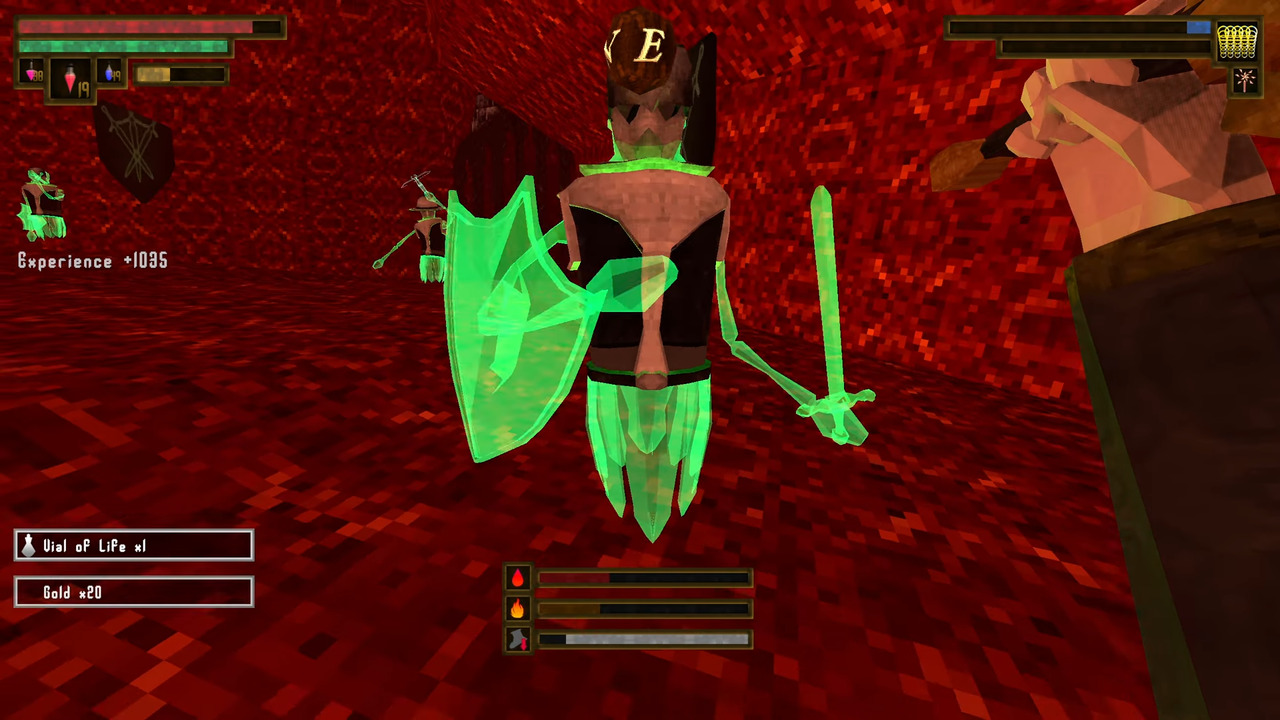
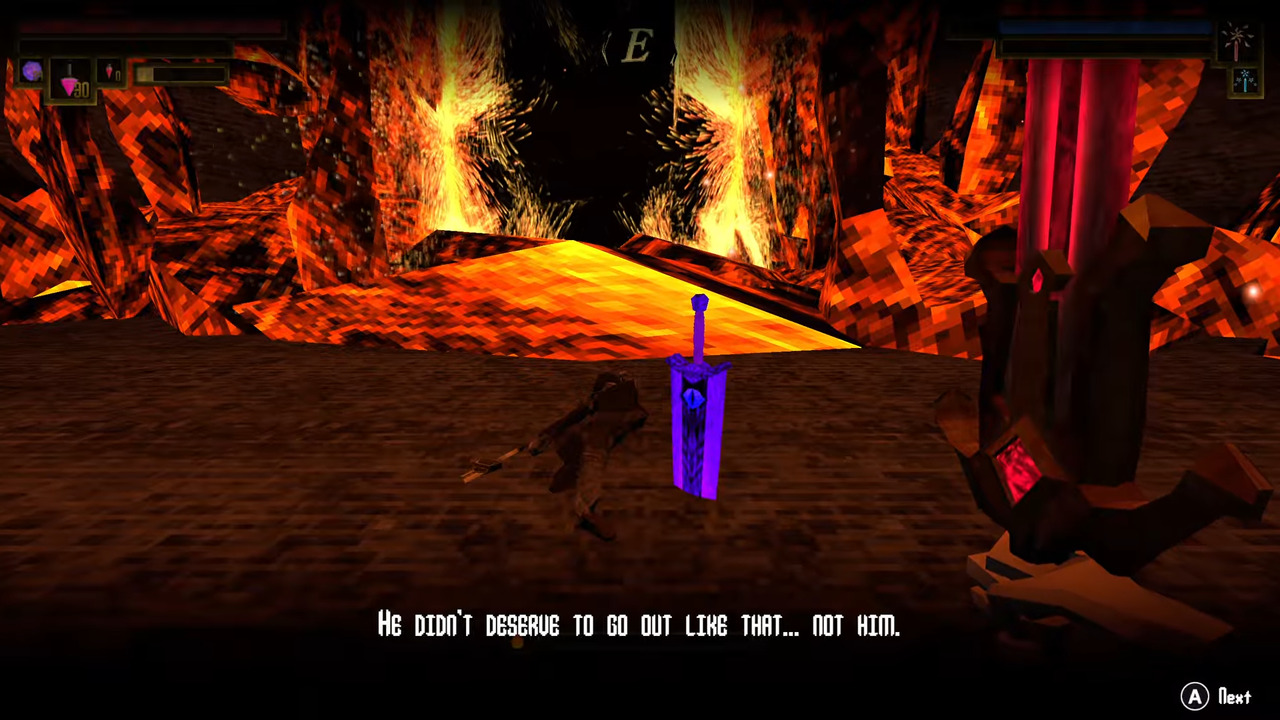
Opting for a retro-inspired visual style that harkens back to the early ‘90s, Verho’s visuals succeed in creating a grimdark atmosphere with limited means. This is largely thanks to the game’s striking colour palette that juxtaposes the bright, saturated colours of enemies and objects against the warm but dark tones of its environments. Textures are lacking in detail, but this is actually a part of the charm, as it leans heavily into that overall aesthetic. The recurring mask designs in particular are a highlight, reinforcing the narrative. In terms of performance, Verho delivers as expected for a game with graphics as simple as these, with a stable frame rate and smooth overall performance.
Sound
Given Verho’s retro visual aesthetic, we were surprised to find that the game’s NPC dialogue is fully voiced. However, the performances aren’t always consistent in tone or delivery. While some of the character voices are serviceable and help ground Yariv, others feel out of place, with accents in particular wildly varying. Yariv gives the impression of a medieval town in Eastern Europe, but some of the cast members sound so American that it almost becomes comical. It doesn’t help that the music sometimes overpowers the voice lines, making it harder to hear dialogue in certain moments. The soundtrack itself does fit with the game’s bleak fantasy atmosphere, helping to sustain tension and unease. Perhaps surprisingly, the strongest element of Verho’s soundscape is the game’s ambience. Wind, distant noises, dungeon echoes, and environmental him all contribute to the game’s sense of dread and isolation.
Gameplay
Whether by design or not, Verho asks -and answers- the question ‘What if Dark Souls was an early ‘90s game?” The core gameplay is slow, deliberate and methodical rather than fast-paced or action-heavy. Emphasis is mostly on careful, tactical combat and cautious exploration. Combat is measured and weighty: attacks, dodges and blocks all feel deliberate. There is a clear sense of risk versus reward. It is here that the game feels most like Dark Souls, in its stamina management and pause-based tactics. Reckless aggression is usually punished, and stamina management matters. Overextending leaves you vulnerable. Enemies are varied and often require different approaches. Especially early on in a run, when you’re still finding your footing, enemy encounters can be punishingly difficult. That said, death feels like a learning opportunity, rather than a cheap punishment.
While most of Verho’s focus is on combat, exploration still comes across as a core pillar of the experience. The world of Yariv is interconnected and mysterious, with few hand-holding elements. There is no map or quest tracker here, and players are expected to explore, discover clues and piece together paths on their own. Secrets, shortcuts and hidden areas are abundant, and encouraged to be found through that excellent environmental storytelling as well as contect clues. This further ties into the way Verho nudges you towards a different playstyle, as it rewards paying close attention over brute-forcing your way through.
Progression is as traditional as it gets: levelling stats, finding and upgrading gear and improving abilities all make a welcome appearance. Equipment matters, and you’ll often find yourself adapting your loadout to optimize for the challenge at hand. This translates into a sense of incremental empowerment, rather than power fantasy gaudiness. Strength grows slowly but meaningfully. The downside of this is that Verho doesn’t feel like a very accessible game. You’re expected to know and understand the intricacies of the Souls-like genre. Information is not spoon-fed, and the UI is deliberately minimalistic. If you’re a veteran, this is fine, as you’ll feel right at home, but newcomers will inevitably feel lost here. We wouldn’t recommend Verho as anyone’s first Souls-like, but aficionados will find around 25 hours worth of game time here.

Conclusion
Despite its similarities to Dark Souls, Verho maintains an identity of its own, rather than being just another Souls-like. By opting for a slower, more methodical approach, Verho manages to feel fresh. Anyone looking for a title that feels familiar but ever-so-slightly different will find what they’re looking for in Verho, with the caveat that this isn’t a game that works as a good introduction to the genre.